20 February 2025
 How to Learn Salah (Prayer) in Islam
How to Learn Salah (Prayer) in Islam
Salah, or prayer, is one of the Five Pillars of Islam and a key component of the daily life of every Muslim. It serves as a direct connection between a Muslim and Allah, offering an opportunity for spiritual reflection, gratitude, and supplication. For a new Muslim or anyone learning about Salah, understanding the proper way to perform it is crucial to gaining its full benefits. In this article, we will explore the step-by-step process of learning Salah in Islam, from the essential components to the significance behind each action.
Importance of Salah in Islam
Salah is a fundamental part of a Muslim’s daily routine and serves to reinforce the connection with Allah. It is performed five times a day: Fajr (pre-dawn), Dhuhr (midday), Asr (afternoon), Maghrib (sunset), and Isha (night). These five prayers provide structure to the day and act as reminders of a Muslim’s purpose in life—to worship Allah and live according to His guidance.
The importance of Salah is highlighted in the Qur’an and the Hadiths (sayings of the Prophet Muhammad, PBUH), where it is mentioned repeatedly as one of the most essential acts of worship. It purifies the heart, strengthens the faith, and serves as a reminder of Allah’s greatness and mercy.
“Indeed, prayer has been decreed upon the believers a decree of specified times.” (Quran 4:103)
Benefits of Learning and Performing Salah
The benefits of performing Salah go beyond the physical acts of standing, bowing, and prostrating. Salah serves as a spiritual practice that cultivates discipline, patience, and mindfulness. It also helps Muslims maintain gratitude, seek forgiveness, and seek protection from sin.
The regularity of Salah helps in developing a routine and maintaining a constant remembrance of Allah. It also provides a sense of community when performed in congregation, strengthening the bonds between Muslims.
The Steps of Salah (Prayer)
1. Making the Intention (Niyyah)
Before performing Salah, the first step is making the intention (Niyyah). This is done in the heart, and the individual must decide which prayer they are about to perform. For example, the intention for the Fajr prayer is made before beginning. The intention is essential because it distinguishes the prayer as a form of worship.
“Actions are judged by intentions, and every person will be rewarded according to what they intended.” (Hadith – Bukhari)
2. Performing Wudu (Ablution)
Before engaging in prayer, a Muslim must be in a state of physical cleanliness. This is done through wudu (ablution), which involves washing specific body parts: hands, mouth, nose, face, arms, head, and feet. Wudu ensures that a Muslim approaches prayer in a state of purity, both spiritually and physically.
If a Muslim is in a state of major impurity (such as after a sexual act or menstruation), they must perform ghusl (full-body purification) before prayer.
3. Standing (Qiyam)
Once the intention is made and wudu is performed, the next step is standing in the direction of the Qibla (the Kaaba in Mecca). The Muslim stands in a respectful posture with their hands raised, and the prayer begins with the Takbir al-Ihram (saying “Allahu Akbar,” meaning “Allah is the Greatest”).
During Qiyam, the following prayer is recited:
- Al-Fatiha (The Opening Surah of the Qur’an)
- A short Surah (chapter) from the Qur’an is also recited after Al-Fatiha, such as Surah Al-Ikhlas or Surah Al-Falaq.
This part of the prayer is a moment of connection and focus, where the worshipper stands in humility and devotion.
4. Bowing (Ruku)
After reciting Al-Fatiha and another Surah, the Muslim proceeds to the ruku, where they bend at the waist, keeping their back straight and hands on their knees. This position symbolizes submission to Allah and is a sign of humility. While in ruku, the following is recited:
“Subhana Rabbiyal Azeem” (Glory is to my Lord, the Almighty)
The ruku position serves as a reminder of the greatness of Allah and the servant’s lowly status.
5. Rising from Bowing (I’tidal)
After bowing, the worshipper returns to a standing position, saying:
“Sami’ Allahu liman Hamidah” (Allah hears the one who praises Him).
Then, they add:
“Rabbana lakal hamd” (Our Lord, to You is due all praise).
This position symbolizes the recognition that all praise belongs to Allah and is a form of gratitude for His blessings.
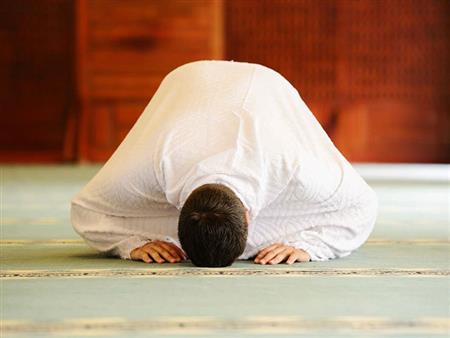
6. Prostration (Sujood)
Next, the worshipper moves into the sujood position, where the forehead, nose, both palms, both knees, and toes are all touching the ground. This act of prostration represents the utmost humility and submission to Allah. The following is recited in sujood:
“Subhana Rabbiyal A’la” (Glory is to my Lord, the Most High)
Prostration is considered one of the most powerful and intimate positions in Salah, as it is during this moment that a Muslim is closest to Allah.
7. Sitting (Jalsa)
After performing two prostrations (Sujood), the worshipper sits on their legs in a posture of calm reflection. This position is called jalsa. During this time, the worshipper can recite the following:
“Rabbighfir li” (My Lord, forgive me).
This is a moment of supplication and reflection before returning to the prostration again.
8. Completing the Prayer (Tashahhud and Tasleem)
At the end of the prayer, after the final prostration, the worshipper sits again and recites the Tashahhud (testification of faith):
“At-tahiyyat li-Lah, wa-salawat wa-tayyibat. Assalamu ‘alayka ayyuha an-nabiyy, wa rahmatullahi wa barakatuh. Assalamu ‘alayna wa ‘ala ibadillahi as-salihin.”
This translates to: “All compliments, prayers, and pure words are for Allah. Peace be upon you, O Prophet, and the mercy of Allah and His blessings. Peace be upon us and upon the righteous servants of Allah.”
Finally, the prayer is concluded with Tasleem (salutation), turning the head to the right and then to the left, saying:
“Assalamu Alaikum wa Rahmatullah” (Peace and mercy of Allah be upon you).
This marks the end of the Salah, and the worshipper can reflect on their prayer and seek additional supplications.
Types of Salah
1. Obligatory Prayers (Fard)
These are the five daily prayers that every Muslim is required to perform. Each one has its own specific time:
- Fajr: Performed at dawn.
- Dhuhr: Performed after midday.
- Asr: Performed in the afternoon.
- Maghrib: Performed after sunset.
- Isha: Performed at night.
2. Voluntary Prayers (Nafl)
In addition to the obligatory prayers, Muslims can also perform voluntary prayers. These include Sunnah prayers, which are highly recommended by the Prophet Muhammad (PBUH), and Nafl prayers, which can be performed at any time.
3. Special Prayers (Tahajjud, Witr, and others)
Some prayers, like the Tahajjud (night prayer) and Witr (odd-numbered prayer), hold special significance. They are highly recommended for spiritual growth and connecting with Allah.
Tips for Learning Salah
1. Start Slow and Be Consistent
Learning Salah can seem overwhelming at first, but it’s essential to start slowly and break down the prayer into manageable steps. Begin with the basic movements and recitations, and gradually increase your understanding over time.
2. Use Resources and Guidance
There are many resources available to help you learn Salah, including mobile apps, online tutorials, and local classes at mosques. Don’t hesitate to ask for help from fellow Muslims or seek guidance from knowledgeable teachers.
3. Practice Regularly
Like any skill, practice is essential to mastering Salah. Set a regular schedule to perform your prayers, even if you start with just one prayer a day. The more you practice, the more confident and comfortable you will become in performing your Salah.
4. Focus on the Meaning
Understanding the meaning behind the words and actions in Salah will deepen your connection with the prayer. Try to learn the translations and meanings of the supplications you recite so that you can make your prayers more mindful.
Conclusion
Learning Salah is a gradual process that requires patience, practice, and dedication. It is more than just a physical act; it is a profound spiritual practice that brings Muslims closer to Allah. By following the steps outlined above, seeking knowledge, and consistently practicing, anyone can learn how to perform Salah correctly and reap the countless benefits of this important act of worship.
Join IslamLearn Academy for free and gain authentic Islamic knowledge in a simple and clear way, guided by qualified scholars.
Subscribe now to IslamLearn Academy for free
Related Posts
9 January 2026
The Status of Jesus Christ in Islam
The Status of Jesus Christ in Islam Introduction Jesus Christ (ʿĪsā ibn Maryam, peace be...
 Read More
28 December 2025
What Is Islam? A Simple Explanation of Belief and the Pillars of Faith
What Is Islam? A Simple Explanation of Belief and the Pillars of Faith Introduction Islam...
Read More
Search
Categories
Tags
Recent Posts
The Status of Jesus Christ in Islam
The Status of Jesus Christ...
What Is Islam? A Simple Explanation of Belief and the Pillars of Faith
What Is Islam? A Simple...

Islamic Religion: Belief and Sharia
Islamic Religion: Belief and Sharia...

The Role of Women in Islam: An In-Depth Perspective
The Role of Women in...
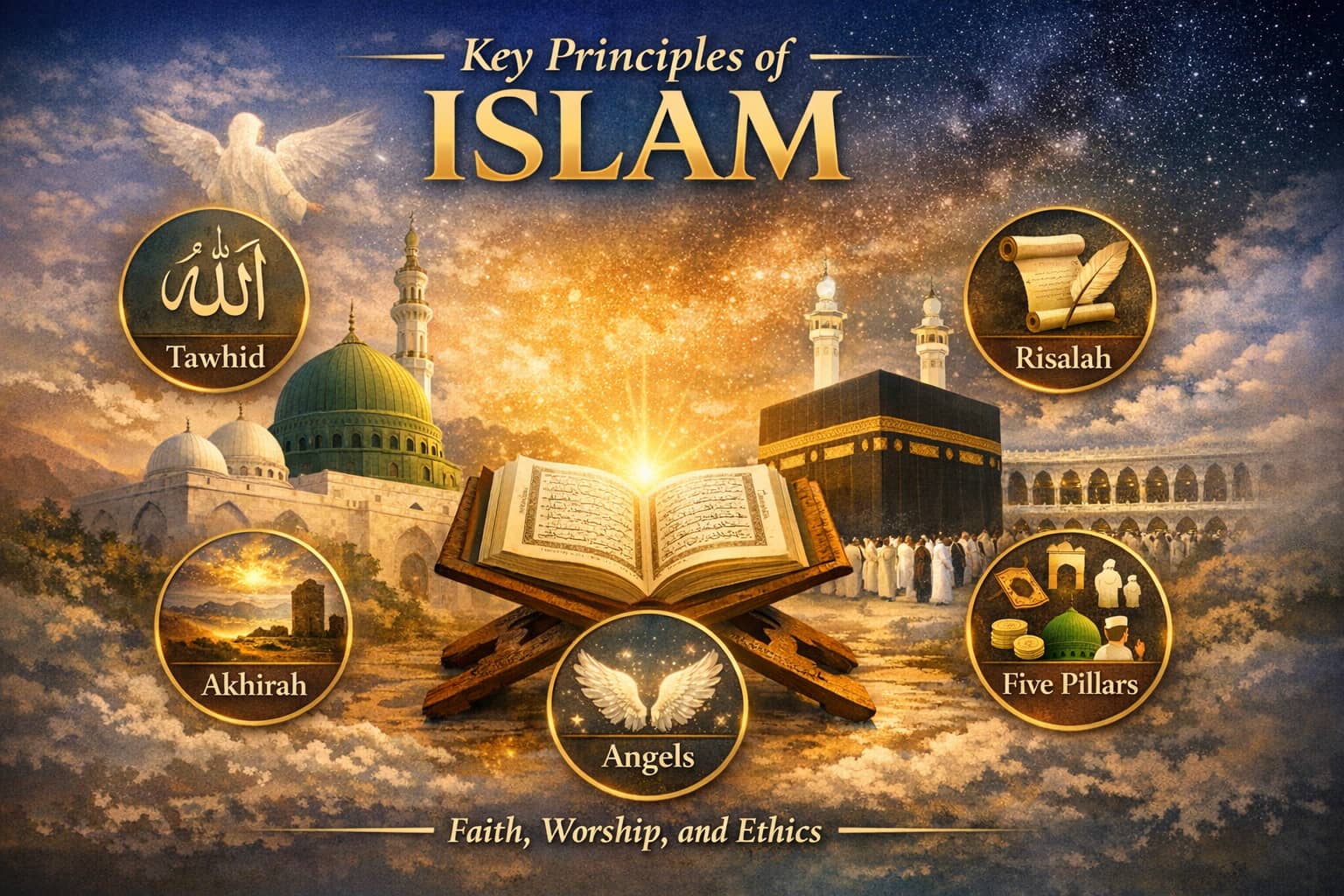
What are the Key Principles of Islam?
What are the Key Principles...