30 April 2026
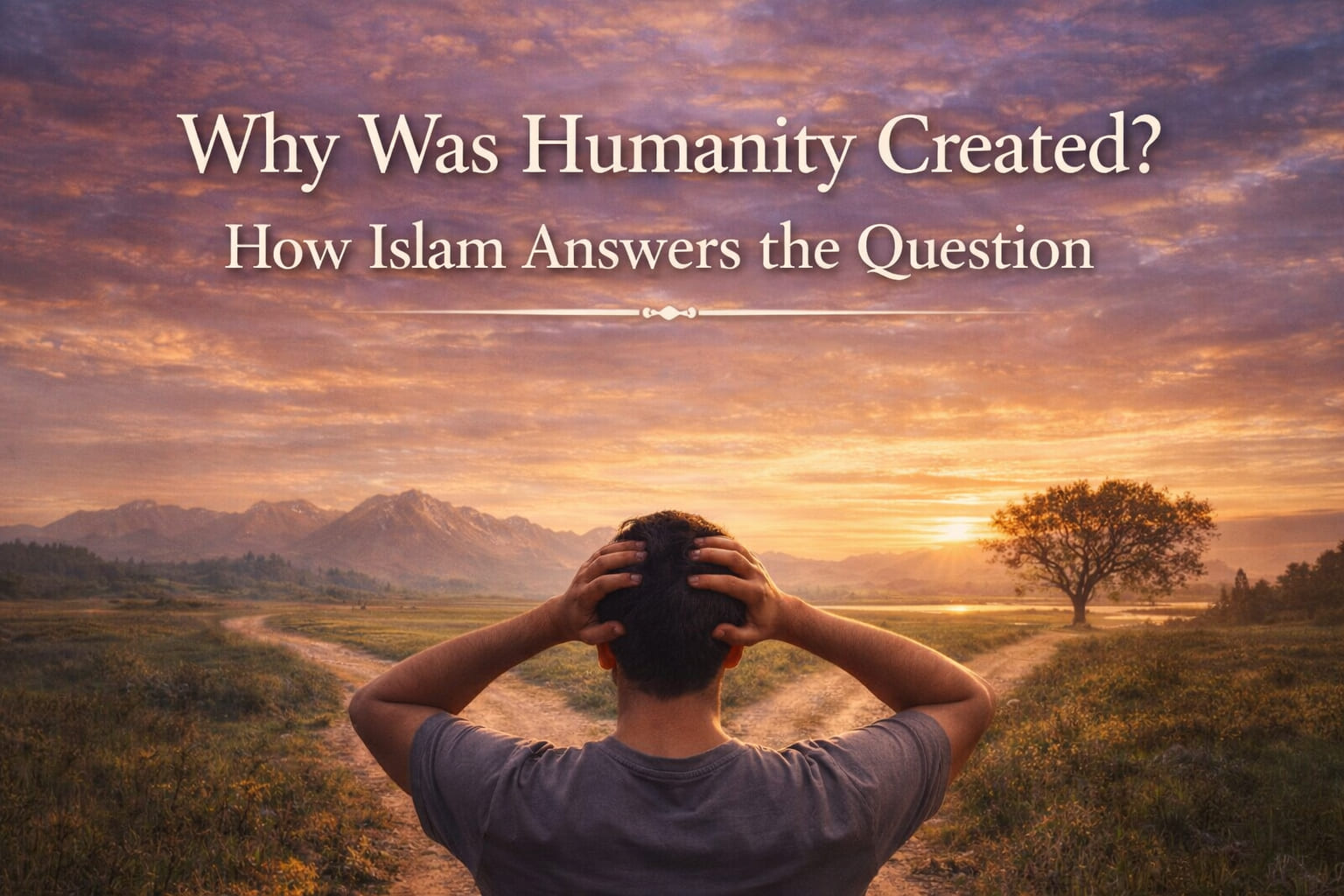
 Why Did God Create Humanity in Islam?
Why Did God Create Humanity in Islam?
Introduction
The question “Why was humanity created?” is one of the deepest existential questions that has occupied the human mind since the dawn of history. Despite scientific and technological progress—and despite material abundance—many people still experience an inner emptiness and confusion about the true meaning and purpose of life.
Different philosophies have offered various answers: some claim that human existence is the result of chance, while others limit life’s purpose to pleasure or material success. Islam, however, presents a comprehensive, clear, and rational answer—one that connects spiritual purpose, moral responsibility, and practical life.
In this article, we explore how Islam answers this fundamental question and why many non-Muslims find this answer logical and compelling.
First: Humanity Was Not Created in Vain
Islam firmly affirms that human existence is neither a blind coincidence nor a purposeless experiment. The Qur’an rejects the idea of randomness in creation and declares that life has a clear purpose:
“Did you think that We created you in vain?”
(Qur’an, Al-Mu’minun 23:115)
According to the Islamic worldview, every human being is born with inherent value, and their role in life is not random. This understanding liberates people from feelings of meaninglessness and grants them a strong sense of purpose and responsibility.
Second: The Meaning of Worship in Islam (A Comprehensive Concept)
When Islam states that humanity was created to worship God, some may assume that this refers only to religious rituals. This, however, is a limited understanding. God says:
“I did not create jinn and humans except to worship Me.”
(Qur’an, Adh-Dhariyat 51:56)
In Islam, worship is a comprehensive concept that includes:
-
Belief in and knowledge of God
-
Commitment to moral values
-
Excellence in work
-
Justice in dealings
-
Kindness to others
Thus, daily life itself—work, learning, building a family—becomes part of humanity’s existential purpose.
Third: Humanity as a Steward on Earth
Islam presents a unique view of humanity’s position in the universe by describing humans as stewards (vicegerents) on earth:
“Indeed, I will place a steward on earth.”
(Qur’an, Al-Baqarah 2:30)
Stewardship does not mean domination or exploitation. Rather, it entails:
-
Bearing responsibility
-
Developing and cultivating the earth
-
Preserving the environment
-
Preventing injustice and corruption
This concept links faith to practical conduct and makes the human being an active participant in improving the world, not merely a passerby.
Fourth: Free Will as the Basis of Moral Accountability
Unlike views that portray humans as completely predetermined, Islam affirms that humans possess free will and the ability to choose—and are therefore accountable for their choices:
“And We showed him the two paths.”
(Qur’an, Al-Balad 90:10)
Human beings are aware of the paths of good and evil and are granted the freedom to choose between them. Life thus becomes a just moral test rather than an experience of oppression or coercion.
Fifth: Why Does Suffering Exist in Life?
One of the most common questions raised by non-Muslims is: if life has a purpose, why is there pain and suffering?
Islam connects suffering to the purpose of creation:
“He who created death and life to test you.”
(Qur’an, Al-Mulk 67:2)
In Islam, suffering:
-
Is not necessarily a sign of divine anger
-
Is not meaningless or random
-
Serves to reveal patience, compassion, and justice
This understanding gives pain meaning, prevents despair, and transforms hardship into an opportunity for human growth and maturity.
Sixth: The Moral Purpose of Human Existence
Islam links the purpose of creation to moral development. Faith is not merely an inner belief but is reflected in behavior, such as:
-
Honesty
-
Trustworthiness
-
Compassion
-
Respect for human dignity, regardless of religion
The Prophet Muhammad ﷺ said:
“I was sent only to perfect noble character.”
Thus, the goal of creation is not withdrawal from the world, but elevating it morally.
Seventh: Life Does Not End with Death
A central element of Islam’s answer to the question of existence is the belief that life does not end with death. There is ultimate accountability and final justice, which explains:
-
Injustices that go unpunished in this world
-
The sacrifices of the righteous
-
The meaning of patience and good deeds without immediate reward
This belief gives life profound moral weight and ensures that every action has real significance.
Why Does the Islamic Answer Convince Many Non-Muslims?
Because it:
-
Provides a clear meaning for life
-
Does not reject reason or science
-
Acknowledges suffering rather than denying it
-
Balances physical and spiritual needs
-
Connects faith with practical behavior
For these reasons, many sincere seekers find in Islam a coherent and satisfying answer to the question: Why do we live?
Conclusion
Islam answers the question “Why was humanity created?” with a comprehensive vision that unites faith, reason, morality, and responsibility.
In the Islamic perspective, humanity:
-
Was not created in vain
-
Was not left without guidance
-
Was created to know God, cultivate the earth, choose goodness, and prepare for an eternal life founded on perfect justice
It is an answer that gives life meaning, grants humanity dignity, and provides existence with a clear and purposeful direction.
Join IslamLearn Academy for free and gain authentic Islamic knowledge in a simple and clear way, guided by qualified scholars.
Related Posts
2 September 2026
Is Islam a Continuation of Christianity?
Is Islam a Continuation of Christianity or a Correction of It? Introduction When Islam emerged...
 Read More
30 August 2026
Jesus in Islam and Christianity: Key Differences
Who Is Jesus in Islam and Christianity? A Comparative Reading of the Qur’an and the...
Read More
Search
Categories
Tags
Recent Posts
Is Islam a Continuation of Christianity?
Is Islam a Continuation of...
Jesus in Islam and Christianity: Key Differences
Who Is Jesus in Islam...
How Was the Quran Preserved Before Printing? Complete Guide
How Was the Quran Preserved...
The Story of Uthman ibn Affan: The Third Rightly Guided Caliph
The Story of Uthman ibn...
How to Become a Muslim: A Complete Step-by-Step Guide
How to Convert to Islam:...