9 July 2026
 Life After Death in Islam: Why Death Is Not the End
Life After Death in Islam: Why Death Is Not the End
Introduction
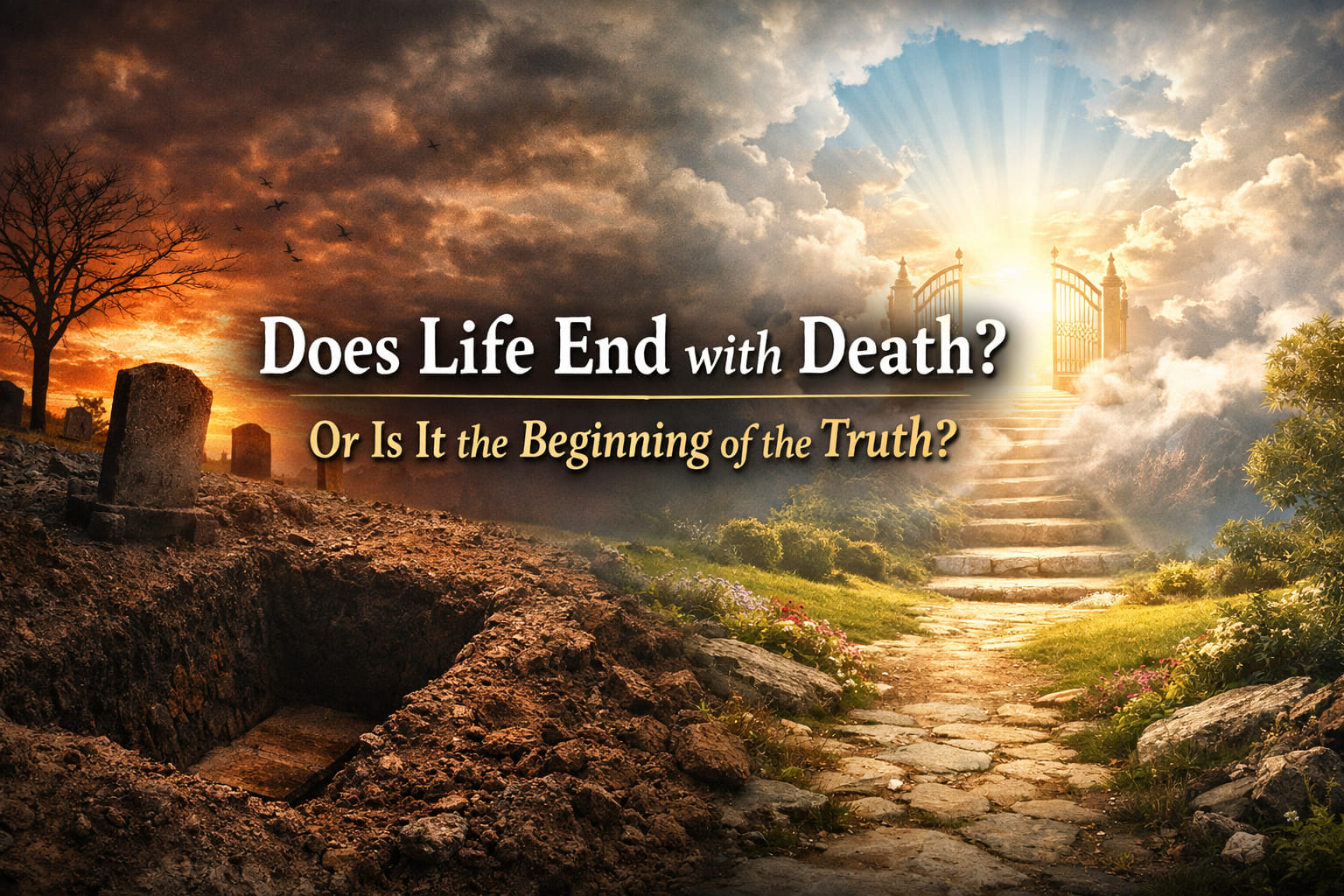
Life After Death is one of the greatest questions every human being will eventually face. Regardless of culture, nationality, or religion, everyone knows that death is unavoidable. Yet one question remains:
Is death the end of our existence, or does it open the door to another reality?
Islam teaches that death is not the end of life but the beginning of a new stage of existence. This belief is not presented as blind faith alone. It is supported by reason, our natural sense of justice, and divine revelation. Understanding life after death changes the way we view our purpose, our choices, and our future.
Why Does the Question of Life After Death Matter?
Many people spend years planning their education, careers, and retirement. Yet few pause to ask what happens after death.
If death truly ends everything, then human life has no ultimate accountability. Good and evil would often receive the same ending, regardless of what people chose during their lives.
However, if life after death is real, then every action gains eternal significance.
This simple possibility makes the question too important to ignore.
Does Human Nature Point Beyond Death?
Across history, nearly every civilization has believed that human existence continues after physical death.
While beliefs differ, the shared expectation is remarkable.
People naturally seek:
-
Justice
-
Meaning
-
Hope
-
Permanence
These desires suggest that humans are created for something greater than a temporary worldly existence.
Islam explains that this inner longing reflects the reality for which humanity was created.
Life After Death and the Need for Perfect Justice
Every day we witness injustice.
Some criminals escape punishment.
Many innocent people suffer without seeing justice during their lifetime.
If death erased everything forever, countless acts of oppression would never be judged.
Islam teaches that ultimate justice belongs to God and will be completed after resurrection.
The Qur’an declares:
“And We will set up the scales of justice for the Day of Resurrection, so no soul will be treated unjustly at all.”
This promise gives meaning to human morality and assures believers that no good deed or injustice is ever forgotten.
What Does Islam Teach About Life After Death?
According to Islam, death is a transition rather than an ending.
After death, every soul enters a new phase before the final resurrection.
On the Day of Judgment:
-
Every person will be resurrected.
-
Every action will be accounted for.
-
Perfect justice will be established.
-
Eternal reward or punishment will follow.
The Qur’an reminds humanity:
“Every soul will taste death. Then to Us you will be returned.”
The verse emphasizes that death is followed by return—not nonexistence.
Can Belief in Life After Death Be Rational?
Some people ask:
“How can I believe in something I cannot see?”
Yet many realities are accepted because of their evidence rather than direct observation.
We cannot see gravity itself.
We cannot see consciousness.
We cannot see love.
Yet their effects are undeniable.
Similarly, belief in life after death rests upon multiple forms of evidence:
-
The remarkable order of the universe.
-
Humanity’s universal moral awareness.
-
The need for ultimate justice.
-
The consistent message revealed through God’s prophets.
Reason does not prove the unseen by itself, but it can point toward it.
Why Did God Create Human Beings?
Islam teaches that human life has a clear purpose.
People were not created randomly nor left without guidance.
God sent prophets throughout history to teach humanity how to know Him, worship Him, and prepare for eternal life.
This world is therefore a test—not the final destination.
Understanding this purpose transforms suffering, success, and even death into meaningful parts of a greater journey.
How Belief in Life After Death Changes Everyday Life
Believing in life after death is not merely a theological idea.
It shapes daily behavior.
A person who expects accountability becomes more careful with:
-
Honesty
-
Kindness
-
Justice
-
Compassion
-
Responsibility
Likewise, hope in eternal reward gives strength during hardship and patience during trials.
Faith in the Hereafter inspires people to seek lasting success instead of temporary gain alone.
Common Questions About Life After Death
Will everyone be judged?
Yes. Islam teaches that every individual will stand before God and answer for their deeds.
Will good deeds matter?
Absolutely. Even the smallest act of kindness is known by God and will receive its proper reward.
Can repentance change a person’s future?
Yes. One of the greatest teachings of Islam is that sincere repentance erases sins before death. God’s mercy remains open until a person’s final moment of life.
The Qur’an’s Invitation to Reflect
Rather than asking people to believe blindly, the Qur’an repeatedly encourages reflection.
It asks humanity to observe creation, think about justice, and consider the purpose behind existence.
Faith is presented as a conclusion reached through sincere reflection combined with divine guidance.
Conclusion
Every person will eventually face death.
The real question is not whether death will come, but what comes after it.
Islam answers with clarity:
Life after death is not a distant myth—it is the continuation of human existence.
Death marks the end of our earthly journey, but it is also the beginning of accountability, justice, and eternal life.
Whether someone already believes or is simply searching for answers, taking this question seriously may become one of the most important decisions they ever make.
Learn More
If you would like to explore Islam through authentic sources, clear explanations, and qualified scholars, join IslamLearn Academy for free and continue your journey of discovering the purpose of life and the reality of the Hereafter.
Related Posts
2 September 2026
Is Islam a Continuation of Christianity?
Is Islam a Continuation of Christianity or a Correction of It? Introduction When Islam emerged...
 Read More
30 August 2026
Jesus in Islam and Christianity: Key Differences
Who Is Jesus in Islam and Christianity? A Comparative Reading of the Qur’an and the...
Read More
Search
Categories
Tags
Recent Posts
Is Islam a Continuation of Christianity?
Is Islam a Continuation of...
Jesus in Islam and Christianity: Key Differences
Who Is Jesus in Islam...
How Was the Quran Preserved Before Printing? Complete Guide
How Was the Quran Preserved...
The Story of Uthman ibn Affan: The Third Rightly Guided Caliph
The Story of Uthman ibn...
How to Become a Muslim: A Complete Step-by-Step Guide
How to Convert to Islam:...