5 June 2026
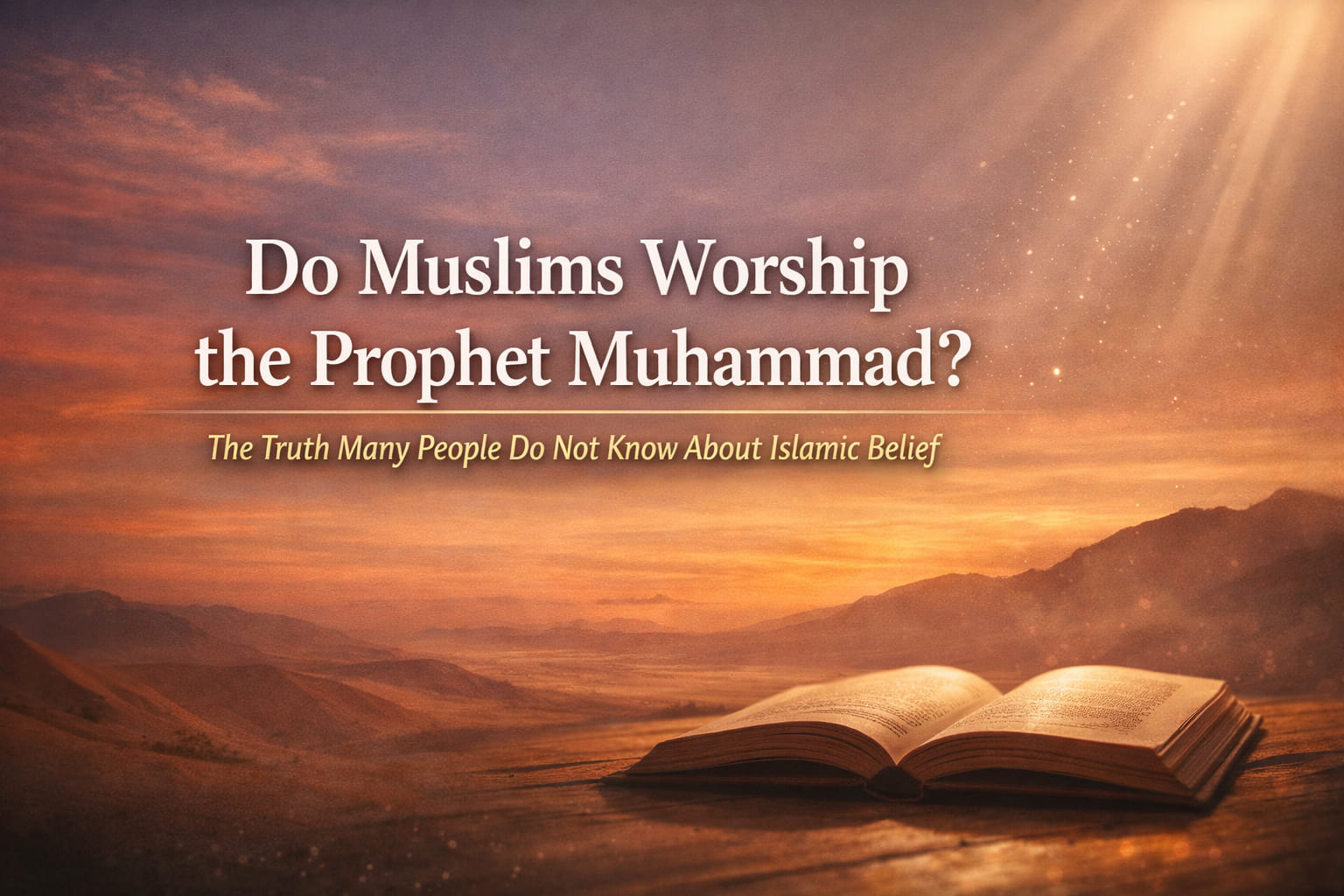
 Do Muslims Worship the Prophet Muhammad?
Do Muslims Worship the Prophet Muhammad?
The Truth Many People Do Not Know About Islamic Belief
This is one of the most common questions asked by some non-Muslims or by people searching for the truth about Islam: Do Muslims worship the Prophet Muhammad? Some people assume that Muslims revere the Prophet so deeply that it amounts to worship, especially when they notice how often his name is mentioned in prayer, in the call to prayer, and in daily religious life.
However, the truth—unknown to many—is that the central foundation of Islam is the worship of God alone and the rejection of worshiping any human being or created being, regardless of their status. In Islam, the Prophet Muhammad ﷺ is a messenger sent by God, not a deity and not part of God.
In this article, we will explain the full truth about this issue using the Quran, Islamic teachings, and Islamic history.
First: The Core of Islam Is the Worship of God Alone
The most important principle in Islam is monotheism, known in Arabic as Tawhid, which means believing that God is One and that only He deserves worship.
This principle appears clearly in one of the shortest chapters of the Quran, known as Surah Al-Ikhlas:
“Say: He is Allah, the One.
Allah, the Eternal Refuge.
He neither begets nor is born,
Nor is there anything comparable to Him.”
This chapter summarizes the essence of Islamic belief:
God is One, without partners, and nothing is equal to Him.
For this reason, worshiping any human being or prophet would be considered a major sin in Islam, known as shirk (associating partners with God).
Second: The Quran Clearly States That Muhammad Is a Human Messenger
The Quran repeatedly emphasizes that the Prophet Muhammad ﷺ is not divine, but a human messenger.
God says in the Quran:
“Say: I am only a human being like you, to whom revelation has been given.” (Quran 18:110)
This verse highlights two important truths:
-
The Prophet is a human being like other humans.
-
His distinction is that he received revelation from God.
Another verse states:
“Muhammad is no more than a messenger.” (Quran 3:144)
This verse confirms that Muhammad is a messenger of God, just like the prophets who came before him.
Third: The Prophet Himself Warned Against Worshiping Him
Many people may not know that the Prophet Muhammad himself warned Muslims against exaggerating in praising him or elevating him to the level of worship.
He said:
“Do not exaggerate in praising me as the Christians exaggerated in praising Jesus, the son of Mary. I am only a servant, so say: the servant of God and His messenger.”
This statement shows that the Prophet clearly set boundaries to prevent people from turning prophets into objects of worship.
Fourth: Why Do Muslims Love the Prophet Muhammad So Much?
Some people mistakenly think that the deep love Muslims have for the Prophet means they worship him. In reality, love in Islam is very different from worship.
Muslims love the Prophet for several reasons:
-
He is the messenger who delivered God’s guidance to humanity.
-
He is a moral example of honesty, mercy, and justice.
-
He taught humanity how to worship God correctly.
Despite this deep love and respect, worship in Islam belongs to God alone.
Fifth: The Difference Between Worship and Respect in Islam
It is important to understand the difference between worship and respect or love.
In Islam, worship includes actions such as:
-
Prayer
-
Supplication (du‘a)
-
Prostration
-
Seeking forgiveness
-
Complete reliance and trust
All these acts of worship must be directed only to God.
The Prophet Muhammad, however, is respected, loved, and followed, but he is not prayed to, worshiped, or called upon instead of God.
Sixth: How Monotheism Appears in the Daily Life of Muslims
Monotheism in Islam is not just a theological concept; it appears clearly in the daily worship of Muslims.
For example, during every unit of the daily prayers, Muslims recite:
“You alone we worship, and You alone we ask for help.”
This verse clearly affirms that worship and seeking help are directed to God alone.
In Islam, people pray directly to God without any intermediaries, which is one of the distinctive features of Islamic worship.
Seventh: The Islamic Declaration of Faith Confirms This Principle
When someone embraces Islam, they recite the Declaration of Faith (Shahada):
“There is no god except God, and Muhammad is the Messenger of God.”
This statement contains two essential truths:
-
There is no god except God
Meaning no one deserves worship except God.
-
Muhammad is the Messenger of God
Meaning Muhammad is a messenger who conveys God’s message, not a deity.
The declaration itself clearly distinguishes between God who is worshiped and the Prophet who delivers the message.
Eighth: Islamic History Confirms This Belief
For more than 1400 years of Islamic history, Muslims have never worshiped the Prophet Muhammad.
Islamic scholars have always warned against any idea that could lead to worshiping human beings.
When the Prophet Muhammad passed away, his close companion Abu Bakr said a famous statement that perfectly summarizes Islamic belief:
“Whoever used to worship Muhammad, Muhammad has died. But whoever worships God, God is Ever-Living and never dies.”
These powerful words reaffirm that worship in Islam belongs to God alone.
Ninth: Why Do Some People Misunderstand This?
There are several reasons why some people mistakenly think Muslims worship the Prophet:
-
Lack of knowledge about Islamic teachings.
-
Misleading or incomplete media portrayals.
-
Confusing respect and love for the Prophet with worship.
However, when Islam is studied from its authentic sources, it becomes clear that pure monotheism is the heart of the religion.
Tenth: The Central Message of Islam
The message brought by the Prophet Muhammad ﷺ was not a call to worship him, but a call to worship God alone.
The Quran states:
“We did not send any messenger before you except that We revealed to him: There is no deity except Me, so worship Me.”
This shows that the message of all prophets—from Adam to Noah, Abraham, Moses, Jesus, and Muhammad—was the same:
Worship God alone.
Conclusion
Islam is a religion built upon pure monotheism, the belief that God alone deserves worship.
In Islam, the Prophet Muhammad ﷺ is not a deity and is not worshiped. He is a noble messenger sent by God to guide humanity.
Muslims love him, respect him, and follow his teachings, but they do not worship him and do not pray to him instead of God.
Therefore, the idea that Muslims worship the Prophet Muhammad is a misunderstanding that arises from a lack of knowledge about Islamic belief.
When we return to the Quran and the teachings of the Prophet himself, the message is clear:
Worship belongs to God alone, and Muhammad is His messenger who delivered this message to humanity.
Join IslamLearn Academy for free and gain authentic Islamic knowledge in a simple and clear way, guided by qualified scholars.
Related Posts
2 September 2026
Is Islam a Continuation of Christianity?
Is Islam a Continuation of Christianity or a Correction of It? Introduction When Islam emerged...
 Read More
30 August 2026
Jesus in Islam and Christianity: Key Differences
Who Is Jesus in Islam and Christianity? A Comparative Reading of the Qur’an and the...
Read More
Search
Categories
Tags
Recent Posts
Is Islam a Continuation of Christianity?
Is Islam a Continuation of...
Jesus in Islam and Christianity: Key Differences
Who Is Jesus in Islam...
How Was the Quran Preserved Before Printing? Complete Guide
How Was the Quran Preserved...
The Story of Uthman ibn Affan: The Third Rightly Guided Caliph
The Story of Uthman ibn...
How to Become a Muslim: A Complete Step-by-Step Guide
How to Convert to Islam:...