29 June 2026
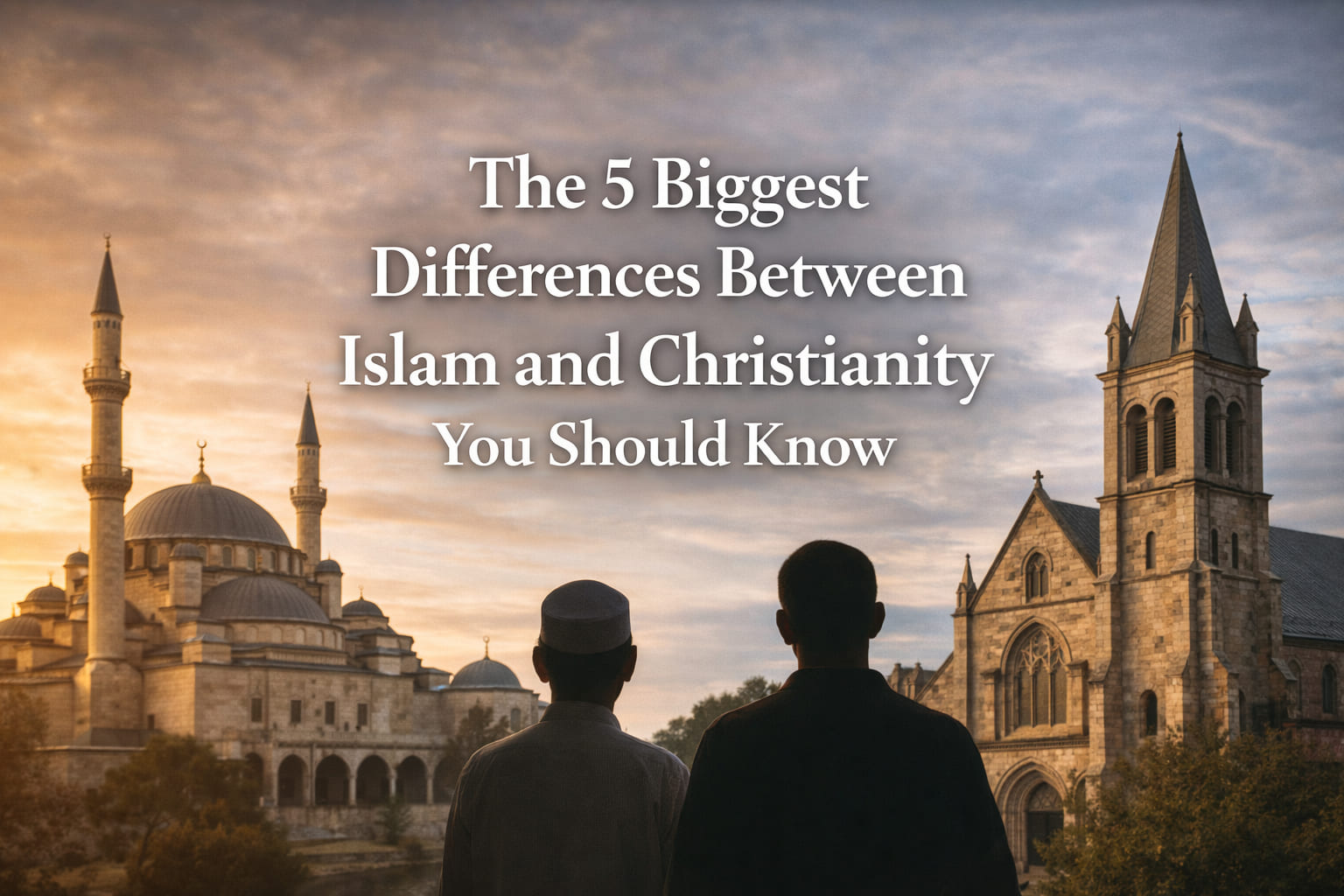
 Five difference Between Islam and Christianity You Should Know
Five difference Between Islam and Christianity You Should Know
Introduction
Islam and Christianity are the two largest religions in the world. Their followers share belief in God, prophets, the Day of Judgment, and essential moral values. However, there are fundamental differences between the two faiths that directly shape their understanding of God, prophethood, salvation, and sacred scriptures.
This article is not meant to provoke debate, but rather to present an objective, evidence-based comparison that helps truth-seekers clearly understand these differences.
First: The Concept of Monotheism and the Nature of God
In Islam:
Islam is built upon pure monotheism — the belief that God is One, without partners, and unlike His creation.
The Quran states:
“Say: He is Allah, the One; Allah, the Eternal Refuge.”
In Islam, God is:
-
Absolutely One
-
Never incarnates
-
Neither begets nor is born
-
Independent of all creation
In Christianity:
Most Christian denominations believe in the Trinity, meaning that God is one in three persons:
-
The Father
-
The Son (Jesus)
-
The Holy Spirit
The Key Difference:
Islam emphasizes a simple, pure, and indivisible concept of God, while Christianity presents a triune understanding that is often seen as philosophically complex.
Second: The Status of Jesus (Peace Be Upon Him)
In Islam:
Muslims believe that Jesus:
-
Is a prophet and messenger of God
-
Was born miraculously without a father
-
Performed miracles by God’s permission
-
Is not divine and not the son of God
The Quran states:
“The Messiah, Jesus son of Mary, was only a messenger of Allah.”
In Christianity:
Christians believe that Jesus is:
-
The Son of God
-
God incarnate
-
Part of the Trinity
The Key Difference:
Islam honors Jesus as a great prophet, while Christianity elevates him to divinity.
Third: The Concept of Sin and Salvation
In Islam:
-
Humans are born pure and sinless
-
Each person is responsible for their own actions
-
There is no concept of inherited sin
The Quran states:
“No soul bears the burden of another.”
Salvation in Islam comes through:
-
Faith in God
-
Righteous deeds
-
Repentance
In Christianity:
Christianity teaches:
-
Original sin inherited from Adam
-
Salvation through faith in the crucifixion of Jesus
The Key Difference:
Islam emphasizes personal accountability and justice, while Christianity centers on redemption through sacrifice.
Fourth: The Sacred Scriptures and Preservation
In Islam:
Muslims believe that:
-
The Quran is the literal word of God
-
It has been perfectly preserved since its revelation
The Quran states:
“Indeed, We have sent down the Reminder, and indeed, We will preserve it.”
In Christianity:
The Bible consists of:
-
The Old Testament
-
The New Testament
However:
-
It was written after Jesus
-
Exists in multiple versions and translations
-
Contains textual variations
The Key Difference:
Islam asserts divine preservation of its scripture, while many scholars acknowledge historical variations in biblical texts.
Fifth: Worship and Relationship with God
In Islam:
The relationship with God is direct:
-
No intermediaries
-
Direct supplication (prayer)
-
Worship encompasses all aspects of life
In Christianity:
In some denominations:
-
Confession to a priest exists
-
The Church plays a mediating role
The Key Difference:
Islam teaches a direct connection between الإنسان and God, while Christianity may involve institutional mediation.
Similarities Despite Differences
Despite these differences, both religions share:
-
Belief in one God
-
Respect for prophets
-
Moral teachings
-
Belief in the afterlife
This suggests a shared divine origin.
Why Do These Differences Matter?
These differences are not minor details — they shape:
-
One’s understanding of God
-
The purpose of life
-
The path to salvation
For example:
-
Is God absolutely One or triune?
-
Is الإنسان accountable individually or burdened by inherited sin?
-
Is salvation through faith alone or through faith and deeds?
A Rational Reflection: Which Concept Aligns with Human Nature?
From a rational perspective:
-
A simple, unified concept of God is easier to understand
-
Individual accountability aligns with justice
-
A direct relationship with God feels more natural
These are principles strongly emphasized in Islam.
Conclusion
In conclusion, while Islam and Christianity share many values, their differences are deep and fundamental.
Understanding these differences is not about conflict, but about:
-
Seeking truth
-
Making informed decisions
-
Developing a clear worldview
If you are searching for truth, begin with questions, reading, and reflection — because truth never fears examination.
Join IslamLearn Academy for free and gain authentic Islamic knowledge in a simple and clear way, guided by qualified scholars.
Subscribe now to IslamLearn Academy for free
Related Posts
2 September 2026
Is Islam a Continuation of Christianity?
Is Islam a Continuation of Christianity or a Correction of It? Introduction When Islam emerged...
 Read More
30 August 2026
Jesus in Islam and Christianity: Key Differences
Who Is Jesus in Islam and Christianity? A Comparative Reading of the Qur’an and the...
Read More
Search
Categories
Tags
Recent Posts
Is Islam a Continuation of Christianity?
Is Islam a Continuation of...
Jesus in Islam and Christianity: Key Differences
Who Is Jesus in Islam...
How Was the Quran Preserved Before Printing? Complete Guide
How Was the Quran Preserved...
The Story of Uthman ibn Affan: The Third Rightly Guided Caliph
The Story of Uthman ibn...
How to Become a Muslim: A Complete Step-by-Step Guide
How to Convert to Islam:...