23 June 2026
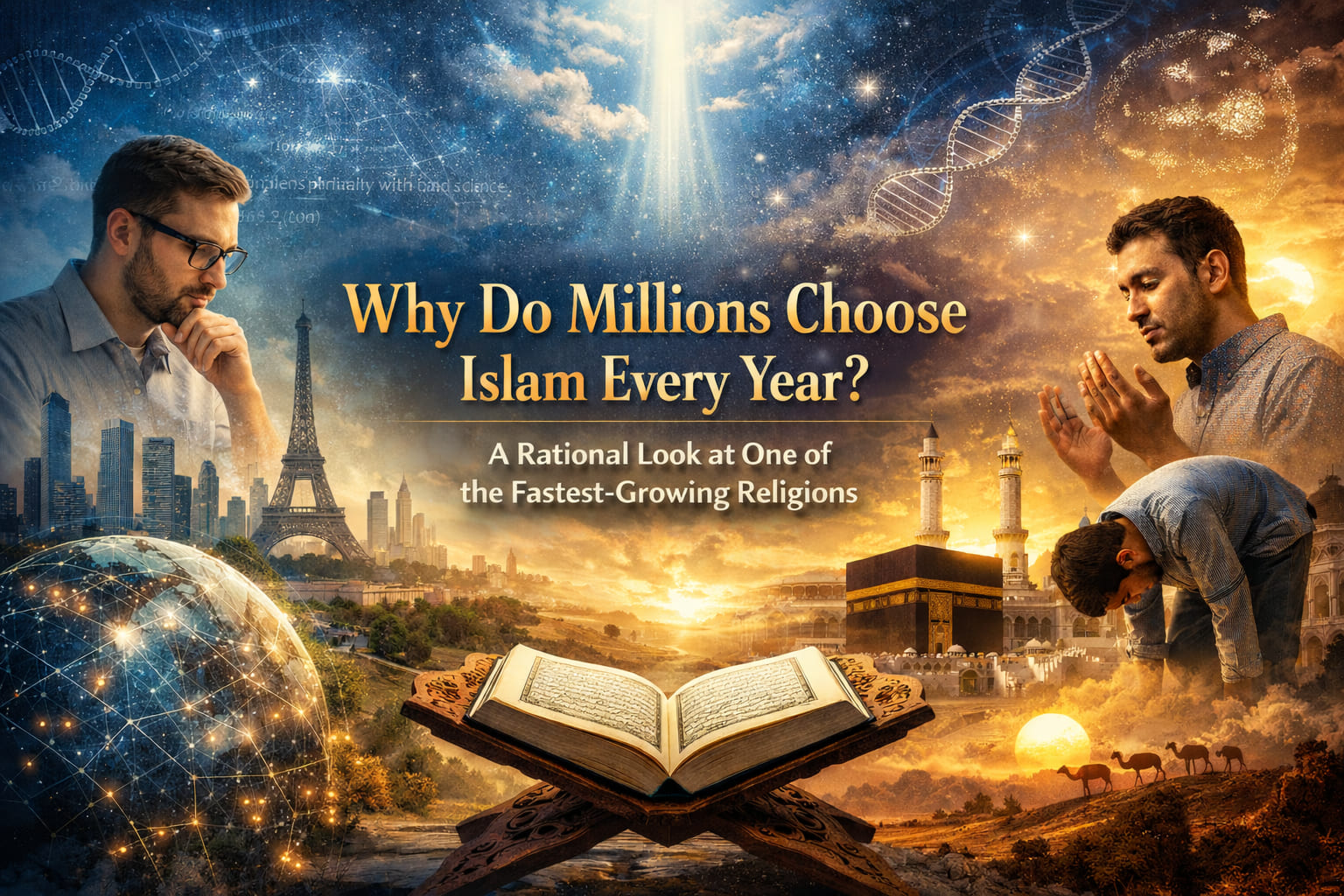
 Why Do Millions Choose Islam Every Year?
Why Do Millions Choose Islam Every Year?
A Rational Look at One of the Fastest-Growing Religions
In a world characterized by religious and cultural diversity, an important question continues to attract the attention of researchers and thinkers: Why do millions of people choose to embrace Islam every year?
Across different regions of the world—from Europe to Latin America, and from Asia to Africa—thousands of people publicly announce their conversion to Islam each year after a journey of reflection and personal search.
This phenomenon is not merely a collection of individual decisions; it has become a subject of study in the field of sociology of religion. Scholars attempt to understand the intellectual and spiritual motivations that lead many individuals to choose Islam specifically.
In this article, we will present a rational and intellectual perspective on this phenomenon, moving beyond superficial explanations in order to explore why many people find convincing answers in Islam to their deepest existential questions.
First: The Simplicity of the Concept of God in Islam
One of the aspects of Islam that attracts many truth-seekers is the clarity of its concept of God.
Islam presents a simple yet profound understanding of God:
One God, the Creator of the universe, incomparable, without partners, and without the need for intermediaries between Him and human beings.
The Quran states:
“Say: He is Allah, the One.
Allah, the Eternal Refuge.
He neither begets nor is born,
nor is there to Him any equivalent.”
This clear concept of monotheism resonates strongly with the natural human inclination to believe in one perfect and supreme Creator.
Many people who have embraced Islam often mention that the idea of pure monotheism was one of the most convincing aspects of the religion because it presents a logical and straightforward understanding of God.
Second: The Quran and the Claim of Preservation
Another important factor that draws many people toward Islam is the Quran.
Muslims believe that the Quran is the word of God revealed to the Prophet Muhammad over 1400 years ago, and that its text has been preserved without alteration throughout history.
What is remarkable is that the Quran does not merely present itself as a religious text; it also challenges humanity by stating:
“And if you are in doubt about what We have sent down upon Our servant, then produce a chapter like it.”
Another unique phenomenon is that millions of Muslims around the world have memorized the entire Quran word for word, a tradition that has continued for centuries.
This extraordinary level of preservation often leads researchers and readers to reflect deeply on the nature of this book and its powerful influence on its followers.
Third: Answering Life’s Greatest Questions
At some point in life, every human being asks fundamental questions such as:
-
Where did we come from?
-
Why do we exist?
-
What happens after death?
Islam offers clear answers to these questions.
According to the Islamic worldview, God created human beings with a specific purpose: to worship Him and to establish goodness and justice on earth.
The Quran says:
“And I did not create jinn and mankind except that they should worship Me.”
Islam also provides a comprehensive understanding of the afterlife, divine justice, and human moral responsibility.
For many people, this perspective gives life a clear meaning and purpose.
Fourth: Balance Between the Spiritual and the Material
One characteristic that many observers notice about Islam is that it offers a balanced way of life.
Islam does not promote complete withdrawal from worldly life, nor does it encourage excessive materialism.
Instead, it balances between:
-
Worship and work
-
Spirituality and physical life
-
Individual responsibility and social obligations
A Muslim is encouraged to worship God while also working, earning a living, and contributing to society.
This balance makes Islam appear to many as a practical system for living, rather than merely a spiritual philosophy.
Fifth: The Character of Prophet Muhammad
The personality of Prophet Muhammad plays an important role in understanding Islam.
Historical sources provide detailed accounts of his life—from his childhood to his death.
The Quran describes him with the words:
“And We have not sent you except as a mercy to the worlds.”
Many non-Muslim historians have also studied his life and influence.
For example, the American historian Michael H. Hart placed Prophet Muhammad first in his famous book The 100: A Ranking of the Most Influential Persons in History.
His life, which combined leadership, moral integrity, compassion, and determination, has inspired admiration among many scholars and readers.
Sixth: The Universal Message of Islam
Another distinctive aspect of Islam is that it does not present itself as a religion limited to a particular ethnicity or nation.
The Quran clearly states that the message of Islam is intended for all humanity.
It says:
“And We have not sent you except to all mankind as a bringer of good tidings and a warner.”
As a result, Muslims today come from hundreds of cultures and speak numerous languages.
There are Muslims in Asia, Africa, Europe, and the Americas, making Islam one of the most culturally diverse religious communities in the world.
Seventh: Ethical and Social Impact
Many people who convert to Islam speak about the moral framework they discovered within it.
Islam emphasizes values such as:
-
Honesty
-
Justice
-
Compassion
-
Helping those in need
-
Respect for parents
Moreover, Islam closely links faith with ethical behavior.
The Prophet Muhammad said:
“I was sent to perfect noble character.”
This perspective makes morality an essential part of religious life rather than merely a personal preference.
Eighth: The Growth of Islam in the Modern World
Numerous sociological studies suggest that Islam is among the fastest-growing religions in the world today.
This growth can be attributed to several factors, including:
-
Population growth in Muslim communities
-
Religious conversion to Islam
-
Increased access to information about Islam through the internet
What is particularly noteworthy is that many people who embrace Islam today do so after personal research and study.
In the age of information, accessing Islamic texts and learning about Islamic teachings has become easier than ever before.
Conclusion
The phenomenon of millions of people embracing Islam each year cannot be explained by a single factor.
Rather, it appears to result from a combination of intellectual and spiritual elements, including:
-
The clarity of Islamic monotheism
-
The profound influence of the Quran
-
Answers to existential questions
-
A balanced worldview
-
The inspiring life of Prophet Muhammad
-
The universal message of Islam
For many seekers of truth, Islam presents a comprehensive vision of life that combines reason and faith, spirituality and action, ethics and purpose.
For this reason, people around the world continue to discover Islam and explore it as a path that offers meaningful answers to their deepest questions about life and existence.
Join IslamLearn Academy for free and gain authentic Islamic knowledge in a simple and clear way, guided by qualified scholars.
Related Posts
2 September 2026
Is Islam a Continuation of Christianity?
Is Islam a Continuation of Christianity or a Correction of It? Introduction When Islam emerged...
 Read More
30 August 2026
Jesus in Islam and Christianity: Key Differences
Who Is Jesus in Islam and Christianity? A Comparative Reading of the Qur’an and the...
Read More
Search
Categories
Tags
Recent Posts
Is Islam a Continuation of Christianity?
Is Islam a Continuation of...
Jesus in Islam and Christianity: Key Differences
Who Is Jesus in Islam...
How Was the Quran Preserved Before Printing? Complete Guide
How Was the Quran Preserved...
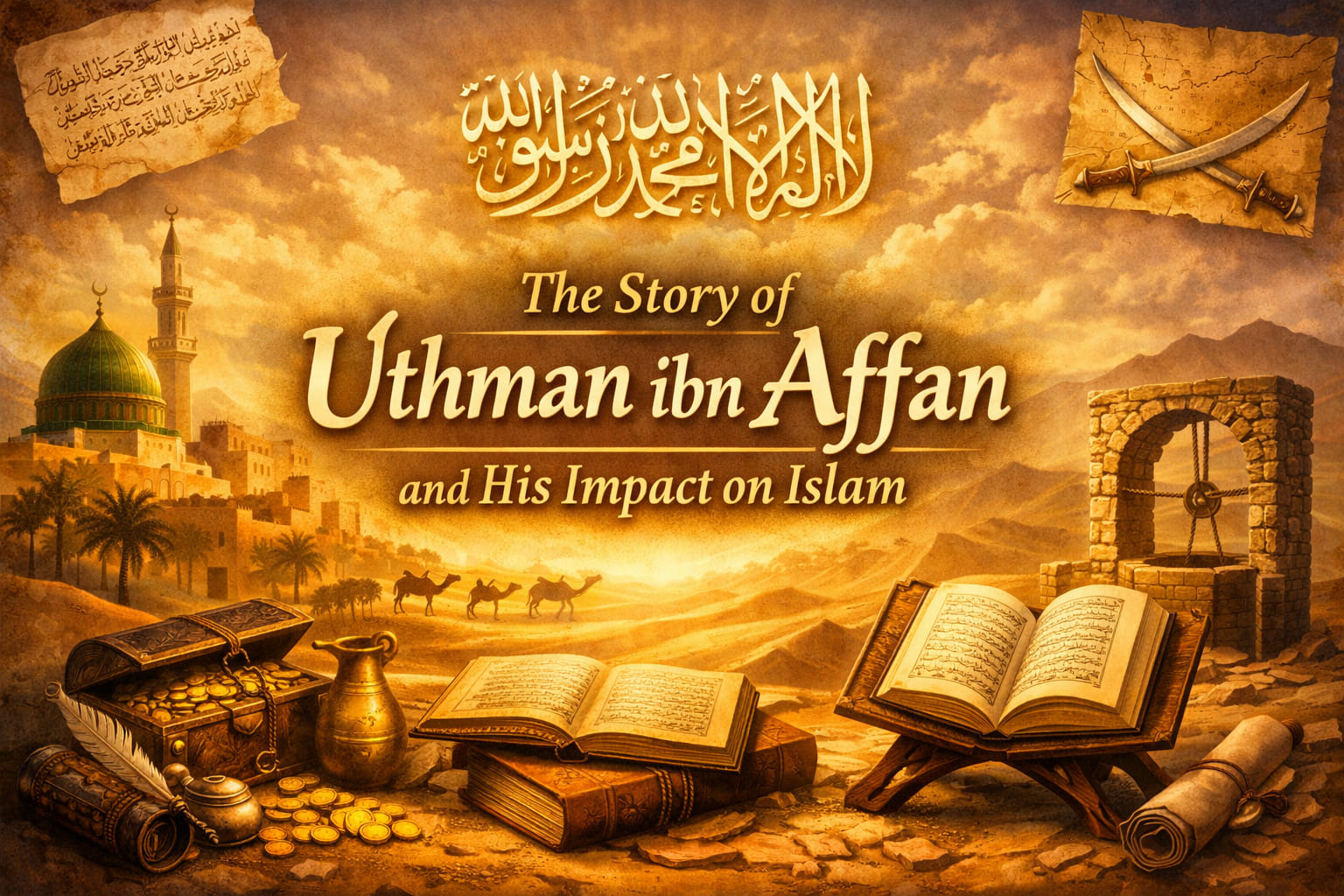
The Story of Uthman ibn Affan: The Third Rightly Guided Caliph
The Story of Uthman ibn...
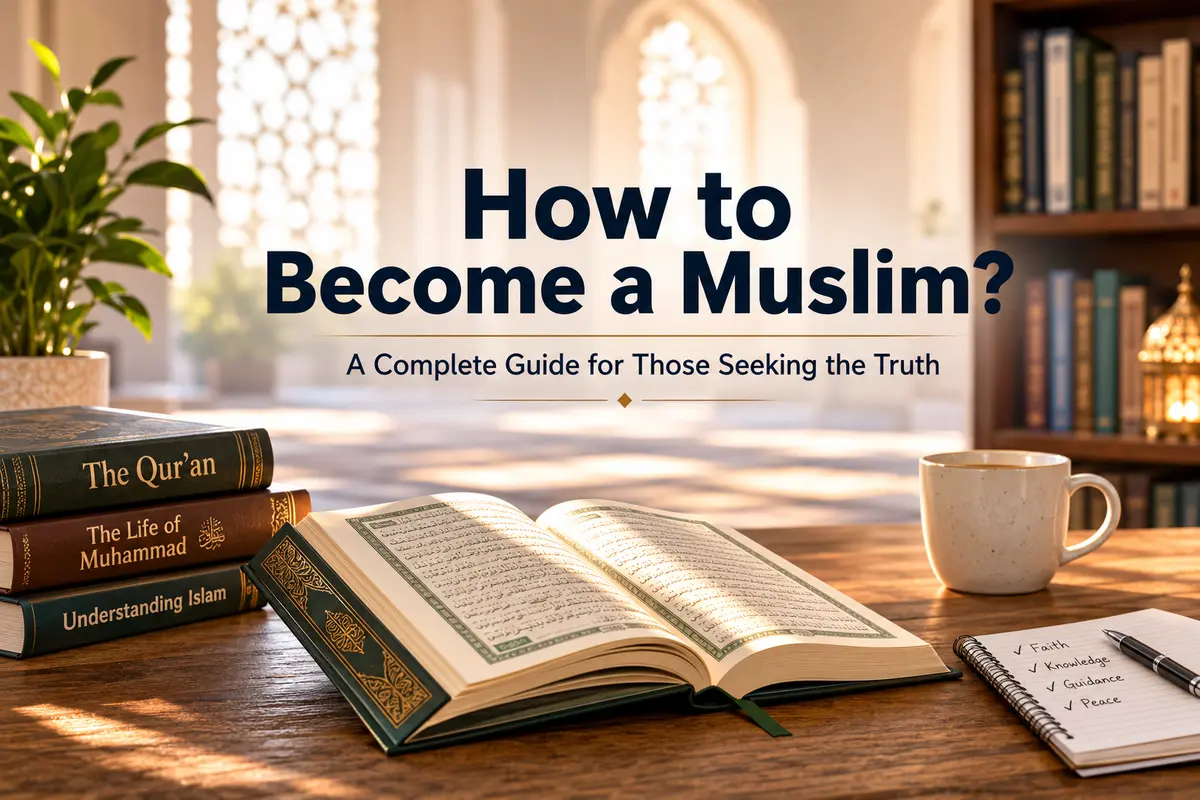
How to Become a Muslim: A Complete Step-by-Step Guide
How to Convert to Islam:...